Plastic Injection Molding Technology
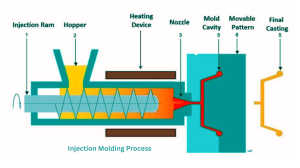
Injection molding involves injecting molten plastic into a mold cavity to produce precise parts or products. This method is highly versatile and is used for creating intricate components with detailed features and complex geometries.
Process Overview: In injection molding the plastic resin pellets are melted through a screw and barrel system, resulting in a molten plastic material that is subsequently injected into a mold cavity under high pressure. The mold is then cooled to solidify the plastic, and the part is ejected for further processing.
Applications: Injection molding is used across industries for manufacturing automotive components, electronic housings, medical devices, and consumer goods.
Advantages:
Plastic Extrusion Technology
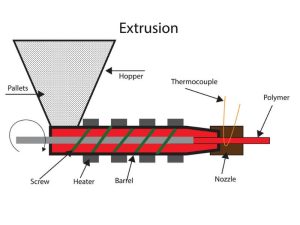
Plastic extrusion involves melting raw plastic material and forming it into a continuous profile. This method is commonly used for creating pipes, tubes, sheets, and various profiles with consistent cross-sections.
Process Overview: Plastic extrusion utilizes an extruder to melt plastic resin pellets, which is then forced through a die to create a specific shape. The cooled material solidifies into the desired profile.
Applications: Extrusion finds applications in construction, automotive, packaging, and consumer goods industries, producing items like PVC pipes, window frames, plastic films, and profiles.
Advantages:
Introducing Drader Injectiweld’s Plastic Injection Welding Technology:
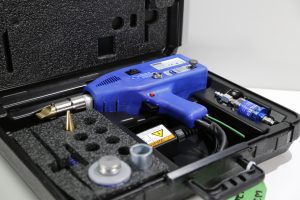
At the forefront of plastic injection technology is the innovative Drader Injectiweld W30000, a portable handheld plastic welder designed for precision and efficiency. Unlike traditional injection molding machines, which are large and stationary, the Injectiweld offers mobility and versatility, making it ideal for on-the-go welding applications.
Technology Overview: The Drader Injectiweld utilizes a proprietary injection welding process, where molten plastic is injected under pressure into the joint area to form a precise weld. Its compact design and ergonomic grip allow for easy operation, while its advanced control system ensures accuracy and consistency in welding.
Applications: The Drader Injectiweld is suitable for a wide range of applications, including repair and fabrication of plastic parts, prototyping, and maintenance tasks across industries such as automotive, construction, and manufacturing.
Advantages of Drader’s Injectiweld Plastic Injection Technology:
Overcoming Limitations of Bulky Extrusion Welders:
Embracing the Future of Plastic Welding
Handheld plastic injection welding technology represents a paradigm shift towards precision, portability, and adaptability in plastic welding. As industries strive for efficiency and innovation, technologies like the Drader Injectiweld redefine the boundaries of what is possible, offering versatile solutions that empower operators to achieve unparalleled welding excellence. By embracing the advantages of size, portability, and adaptability, handheld injection technology heralds a new era of welding prowess, where precision meets mobility with transformative results.
Contact Drader for more details.
.svg)
.png)

%20(1).svg)
